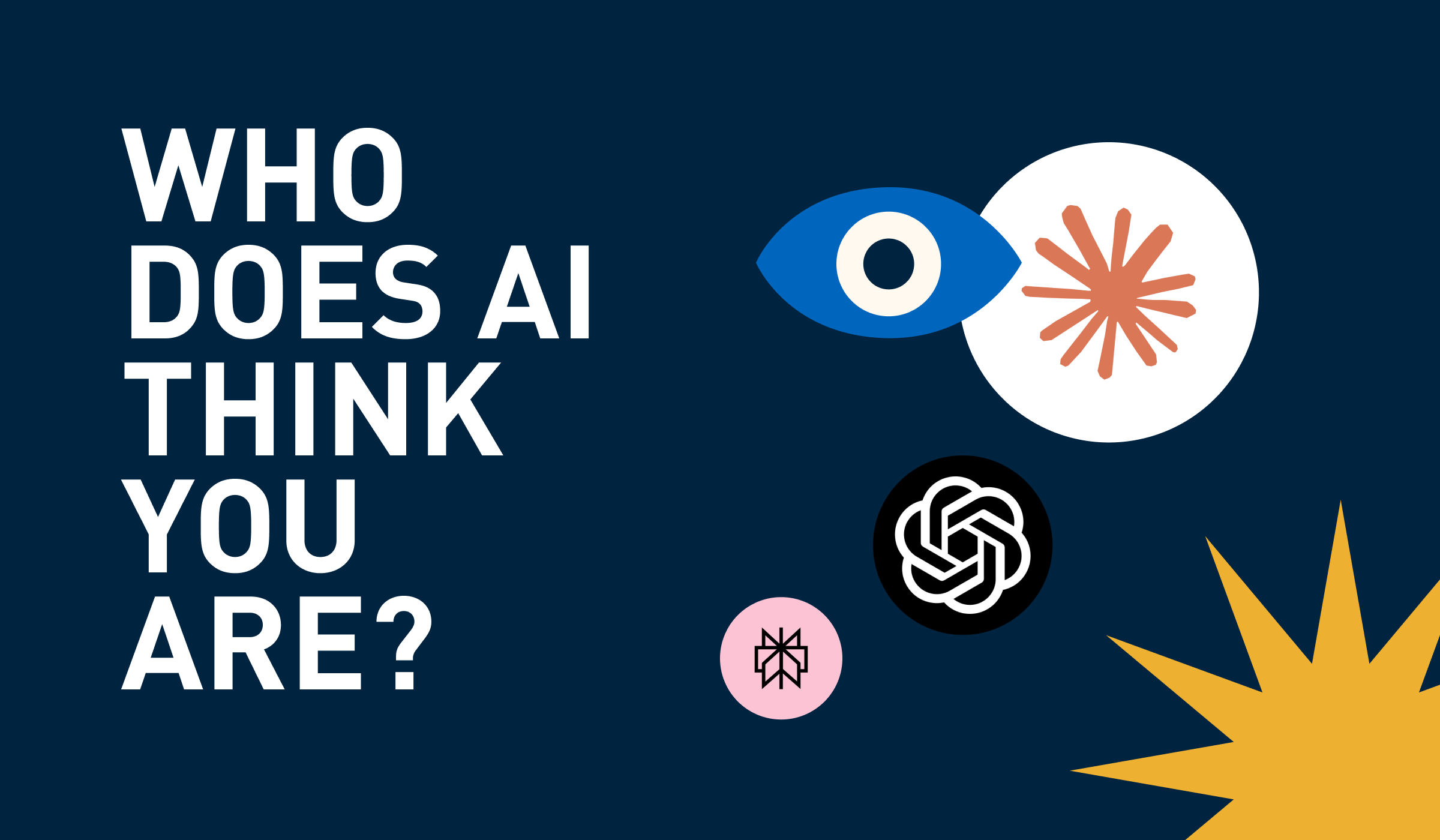
Last week I asked ChatGPT, Perplexity and Google AI Mode a simple question: what is BlueMelon Design?
The answers were confident, friendly and out of date. They listed services we no longer offer and audiences we’ve moved away from. One linked a video we made three years ago as if it were news.
None of it was made up. Every line came from something we’d put out there ourselves and forgot to update.
So here’s the check I ran, step by step. You can run it on your company or on a product. You need a coffee, three browser tabs and an afternoon.
Why does it matter what AI tools say about you?
Because your buyers are asking them. In a Gartner survey of 645 B2B buyers, 45% said they used generative AI in a recent purchase, mainly to research vendors and products. And 69% said they prefer to check what AI told them with a sales rep.
So the AI answer often gets to the buyer before you do. If it’s wrong, your sales team starts the conversation by correcting it.
Before you start
- The tools remember you. I used ChatGPT’s temporary chat and it still knew BlueMelon was my business. One answer said it was listing us separately “because I know it’s your business”. Use a logged-out browser, or ask someone outside the company to run it.
- Google personalises too. I manage our Google Business Profile, so I see a different page from our buyers. AI Mode offers a “Try without personalization” option.
- One answer is one sample. Ask the same question twice and you can get a different list. Look for patterns across tools, not a single answer.
- Some answers have no sources. ChatGPT answered some how-to questions without searching the web. That comes from what the model already learned, so there’s no page to fix in the short term.
How do I check what AI tools say about my company?
1. Write down how you describe yourself. One line. Who you help, with what. You’ll check every answer against it.
2. Open three tools. ChatGPT, Perplexity and Google AI Mode. Add Claude or Gemini if your team uses them (Gemini didn’t answer for me). Use a logged-out browser or a private window, so your own history doesn’t shape the answers. Claude needs you to sign in, so use a colleague’s account or a new one.
3. Ask four questions about yourself.
- What is [company]?
- What does [company] do, and who has it worked with?
- Who are [company]’s competitors in [country]?
- Would [company] be a good fit for [the job your buyers hire you for]?
4. Ask two questions a buyer would ask, without your name in them. For example, “Who are the best [your category] in [city] for [your buyer]?” and “How much does it cost to hire [your category] for [the job] in [country]?” This shows whether you’re found when nobody knows to look for you.
5. Note three things for every answer. Is it right? Is it current? Which sources does it cite?
6. Follow the sources. Most wrong answers trace back to a page you control: an old service page, an old LinkedIn About, a directory profile, the description Google shows under your link.
7. Fix the source, not the answer. Update the page, the profile or the listing. Tools that search the web pick up the change as they re-read it. How fast, I don’t know yet. That’s what step 8 is for.
8. Run it again next month. Same questions, same tools. Keep a simple log.
Can product teams run this on a product?
Yes. Same steps, different questions. Swap the company for the product:
- What is [product]?
- How does [product] compare with [competitor]?
- Is [product] a good fit for [use case]?
- What are the best [category] tools for [use case]? (no product name)
- How much does [category] cost for a team of [size]?
The sources to follow will be different: product pages, docs, release notes, review sites and old launch posts. I haven’t run this on a product yet. But if an old blog post can describe an agency of three years ago, I’d expect an old launch post to do the same for a feature list or a pricing tier.
What did we find?
AI tools described the BlueMelon of about three years ago. The sources were a 2021 blog post, an old cached version of our homepage and older versions of our LinkedIn About. All ours.
We were named only when the question matched a case study. Ask for an agency that has worked with Atlassian or Salesforce, and we come up. Ask for the best B2B agencies in Sydney for a tech company, and we don’t, in any of the three tools.
Directories decide who you’re compared with. When I asked for our competitors, the tools read old directory profiles that file us under graphic design and branding. So they compared us with branding studios, not the people we actually sit alongside.
Plain pages get quoted, not only big brands. For how-to questions and questions about cost, the tools often cited small Australian agencies: plain how-to pages and pages that explain what drives the cost. For a buyer, that’s useful to know. A clear page on your own site can be the one that answers questions about your category.
AI questions look different from Google searches. Around AI and design, people mostly type tool searches into Google: “ai logo generator”, “ai website builder”. Questions like “can AI replace a designer?” barely register in Google. My guess is people ask those in AI tools instead. Some searches reaching our site already read like prompts, for example “as a growth marketing lead, how can i visualize customer pain points and motivations?”
What are we doing about it?
We’re fixing the sources, not chasing the answers. I’ll run the same questions next month and see what changed.
What would I fix first?
If you only have an hour after the check:
- The description of your homepage and your LinkedIn About. In our case they fed almost every answer.
- Your directory profiles. They decide who you’re compared with.
- Your best case study. Make sure it says plainly who it was for, what you did and what changed. It’s what got us named.
If you run the check, I’d like to compare notes. Get in touch.
What did the AI tools get wrong about you?
Copy-ready checklist
How AI tools see your business: monthly check
Before you start: logged-out browser or private window. Or ask someone outside the company.
- Write your one line: who you help, with what.
- Open ChatGPT, Perplexity and Google AI Mode (Claude or Gemini if you use them).
- Ask about yourself:
- What is [company]?
- What does [company] do, and who has it worked with?
- Who are [company]’s competitors in [country]?
- Would [company] be a good fit for [the job your buyers hire you for]?
- Ask as a buyer, without your name:
- Who are the best [your category] in [city] for [your buyer]?
- How much does it cost to hire [your category] for [the job] in [country]?
- For every answer: is it right? Is it current? Which sources does it cite?
- Follow the sources back to the page.
- Fix the page, profile or listing, not the answer.
- Run it again next month. Same questions, same tools. Log what changed.